Drawer dividers vs trays: which keeps order?
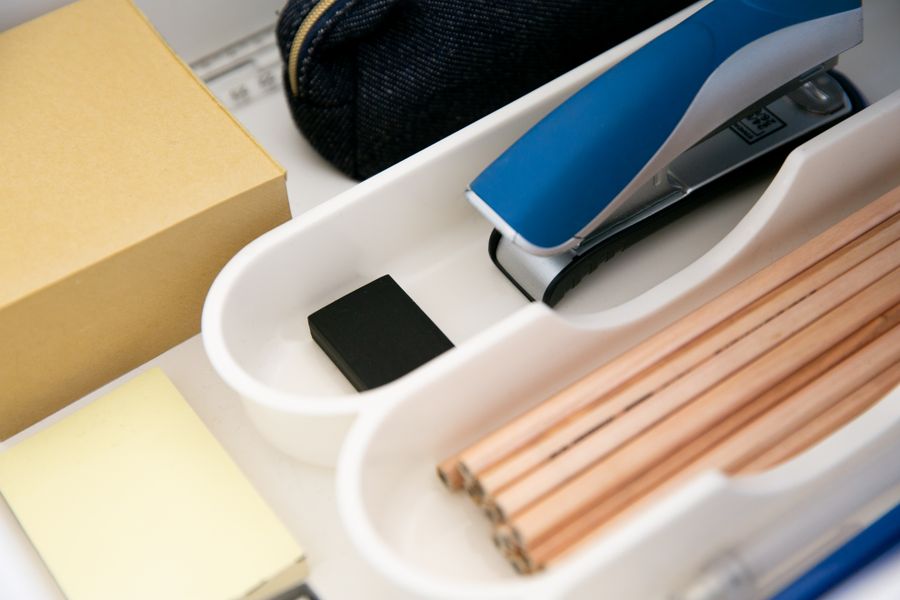
Trays win for small, loose items because each category gets its own removable compartment. Dividers win for large or oddly shaped contents because they split the whole drawer edge to edge. Most drawers end up happiest with trays for the fiddly front half and dividers for the bulky back.
At a glance
| Product | Best for | Price | Warranty |
|---|---|---|---|
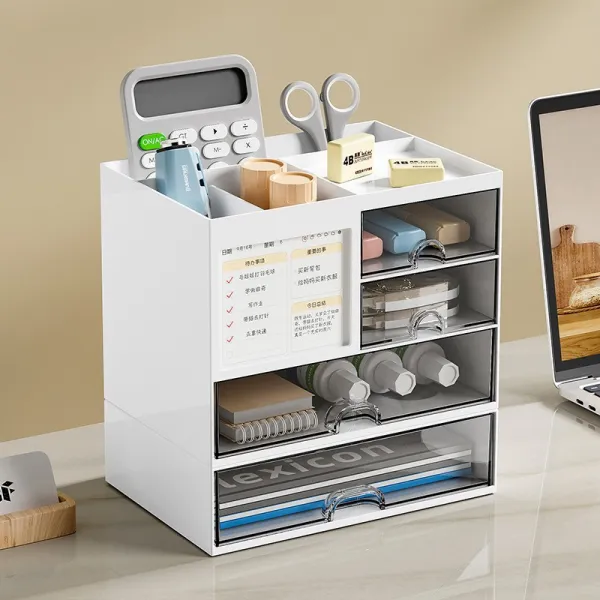
| Divided Drawer-Style Pen Holder | Every pen gets a slot | € 12.95 | 2 years |
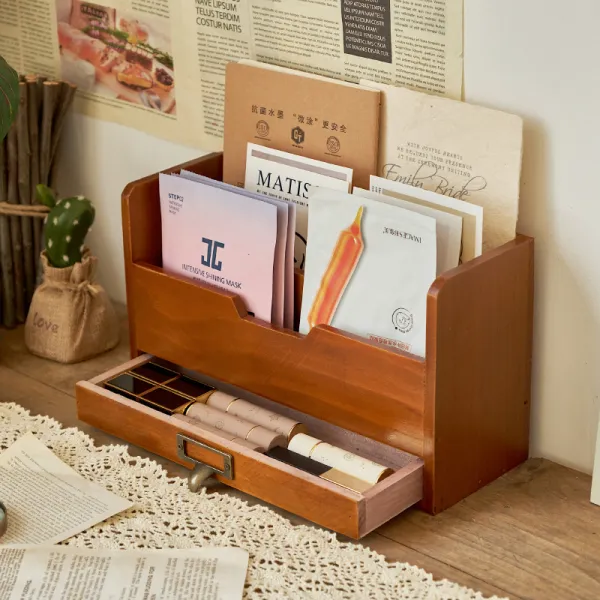
| Wooden Desktop Drawer Organizer | A tiny wooden drawer for desk clutter | € 33.95 | 2 years |
Two tools that solve different halves
Dividers and trays get lumped together as drawer organizers, but they work differently. A divider splits the whole drawer into lanes, edge to edge, and excels at big or long contents: utensils, tools, rolled textiles. A tray is a small container with compartments that sits inside the drawer and excels at the fiddly: pens, clips, batteries, cables. The practical difference is granularity. Dividers make a few large territories; trays make many small ones. Choose by what the drawer actually holds, not by which looks tidier in a photo.
When trays win
Trays win wherever the contents are small enough to migrate. Loose pens drift under notepads, spare keys work their way to the back; compartment walls stop all of it. And because a tray lifts out, the whole category comes to you: carry the pen tray to the table, put it back when done. A drawer-style divided tray like the Divided Pen Holder covers the desk drawer's classic load. The rule of thumb from the desk-drawer guide applies everywhere: nothing smaller than your palm should live loose in a drawer.
When dividers win
Dividers win when contents are large, long or standing on edge. Kitchen utensils, folded t-shirts filed vertically, tools: none of that fits a tray's small compartments, and forcing it wastes half the drawer in unused pockets. Dividers also flex better as contents change, since most adjust or reposition to redraw the lanes. If your categories are chunky and few, lanes beat pockets. If the drawer holds twenty tiny categories, it is tray territory. Mixed loads take the hybrid below.
The hybrid, plus the on-the-desk exception
Most real drawers hold both scales, so split the real estate: trays in the front half for the small stuff you grab daily, divided lanes in the back for the bulky. The drawer opens onto the fiddly things first, which is the order you actually reach for them. One category deserves promotion out of the drawer entirely: the handful of items you use hourly. Those belong on the desk in an open-topped organizer, like the Wooden Desktop Drawer Organizer, where reaching costs one second and putting back costs zero.
Measure, then commit
Whichever you choose, measure the drawer's internal width, depth and, most forgotten, its usable height: a tray that sits too tall stops the drawer from closing over its contents. Check listed dimensions rather than eyeballing photos. Then give every compartment one named category and run the one-in-one-out rule per compartment. Organizers do not create order; they hold the order you decide on. The walls just make the decision durable.
FAQ
Are dividers or trays better for a junk drawer?
Trays, mostly: junk drawers are many tiny categories, which is exactly what compartments handle. Use a divided tray for the small stuff up front, and a single open lane at the back for the bulky odd items every junk drawer accumulates.
How do I stop a drawer organizer sliding around?
Fill it so its own weight holds it, place it snug against the drawer's front edge, or add a thin non-slip mat underneath. A tray that closely fits the drawer's width barely moves in daily use.
What size organizer fits my drawer?
Measure internal width and depth, and the usable height under the drawer's top edge. A tray should sit low enough for the drawer to close over its tallest item, with a little clearance for daily reaching.