Small kitchen organization: space you didn't know you had
Small kitchens don't need renovations — they need the dead zones put to work. Under the sink, inside the fridge and above the drying rack hide more storage than most people use. Here's how to claim it.
At a glance
| Product | Best for | Price | Warranty |
|---|---|---|---|
| 2-Tier Under-Sink Shelf with Hooks | Real supplier stock — ships in 8–15 days | € 35.95 | 2 years |
| Clear Stackable Fridge Bins (6-Piece) | Real supplier stock — ships in 8–15 days | € 35.95 | 2 years |
| Stainless Steel Dish Drying Rack | Real supplier stock — ships in 8–15 days | € 23.95 | 2 years |
Start under the sink — the most wasted cupboard in the house
The under-sink cupboard is usually a graveyard: one tall dark space where cleaning bottles lean against each other and everything behind row one disappears. The fix is layers. A two-tier shelf that fits around the pipes turns one messy floor into two usable levels — sprays standing on top, refills and cloths below. Measure before you buy: depth of the cupboard, height to the pipe, and where the drain sits. Adjustable shelves like the 2-Tier Under-Sink Shelf are built to straddle plumbing, so you keep the full width even with a garbage bin in front. The rule afterwards: nothing lies flat. Everything stands, everything visible.
The fridge: bins beat shelves
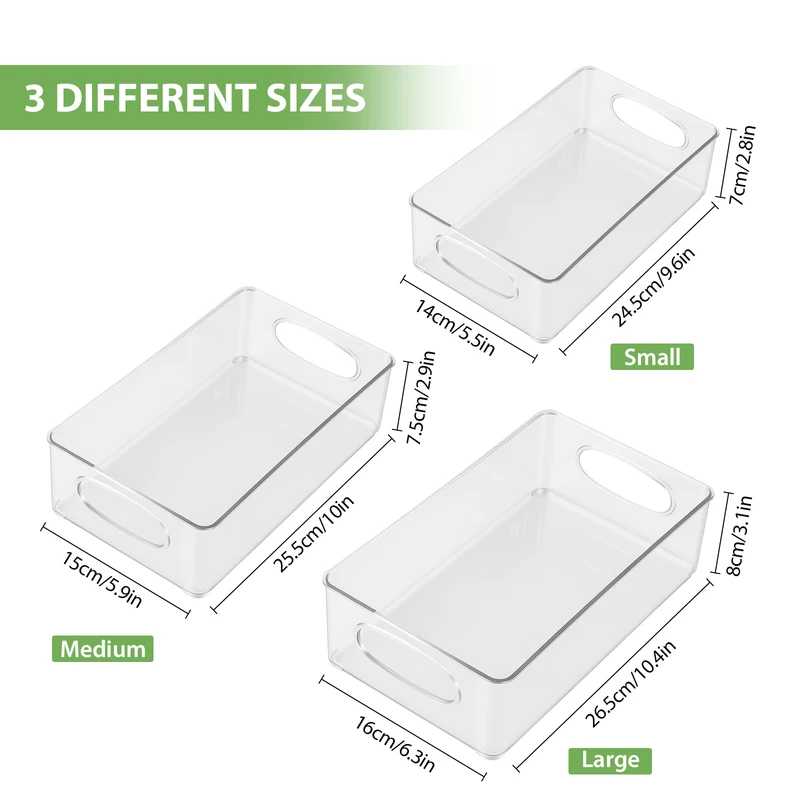
Fridge chaos has one cause: things loaded behind other things. Clear stackable bins fix it by turning loose items into drawers you can pull out — one bin for dairy, one for jars, one for leftovers-eat-me-first. Because the bins are transparent, nothing gets lost at the back, which is where most food waste is born. The eat-me-first bin deserves special mention: everything approaching its date goes in one visible container at eye level. Households that use one consistently throw away noticeably less. The Clear Stackable Fridge Bins come in three sizes with handles — start with the shelf that annoys you most, not the whole fridge at once.
Vertical drying, clear counters
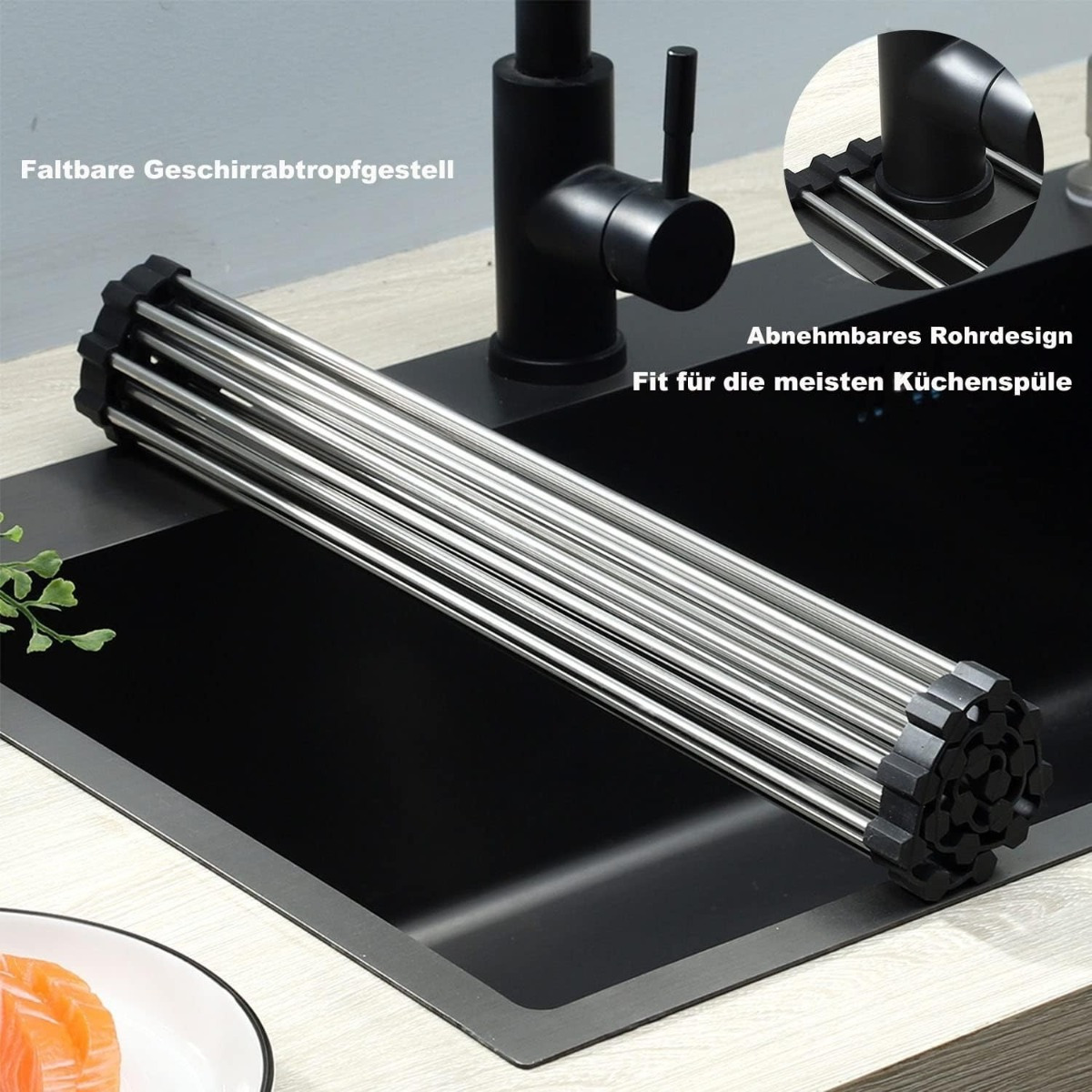
Counter space is a small kitchen's scarcest resource, and the dish rack is usually its biggest squatter. Two moves reclaim it: a rack with real drainage (so it can live by the sink without a puddle) and the discipline of emptying it every morning — a rack is a transit zone, not cupboard number two. A stainless rack like the Dish Drying Rack survives daily use without rusting, and its footprint should match your actual dish load: a two-person household needs half the rack a family does. If counters are truly tight, look up — the wall above the sink can hold a rail for utensils that currently occupy a drawer.
One shelf, one job
The rule that keeps a small kitchen organised after the first burst of enthusiasm: every shelf and drawer gets exactly one job, and its name is decided out loud. The baking shelf. The breakfast drawer. The tea corner. When storage has names, things return to their place without thinking — and when it doesn't, every surface slowly becomes 'miscellaneous'. Do the naming pass with what you own now, throw out or donate what hasn't been touched in a year, and only then decide whether you need more storage. Most small kitchens don't need more space; they need fewer 'miscellaneous' zones. Total cost of this entire guide's approach: well under a hundred euros — and the counters stay clear because everything has an address.
FAQ
Where do I start organising a small kitchen?
Start with the under-sink cupboard: it's the most wasted space and takes under an hour. Add a two-tier shelf around the pipes, stand everything upright, and move rarely-used items elsewhere. The visible win motivates the rest of the kitchen.
How do I stop wasting food in the fridge?
Use clear bins as pull-out drawers and keep one 'eat me first' bin at eye level for anything near its date. Transparency is the whole trick: food gets wasted when it's invisible behind other food.
Should the dish rack live on the counter permanently?
Only if you empty it every morning — a rack is a transit zone, not extra cupboard space. Choose one sized to your household and with proper drainage so the counter under it stays dry.
What's the 'one shelf, one job' rule?
Every shelf or drawer gets a single named purpose — the breakfast drawer, the baking shelf. Named storage means things get returned automatically, which is what keeps a kitchen organised long after the initial tidy-up.