How to store seasonal clothes in a small home
Store seasonal clothes clean, folded and labelled in closed boxes, in the spots you never use daily: the top of the closet, under the bed, the highest kitchen cupboard. Wash everything first, label the short side of every box, and do the swap twice a year when the weather turns.
At a glance
| Product | Best for | Price | Warranty |
|---|---|---|---|
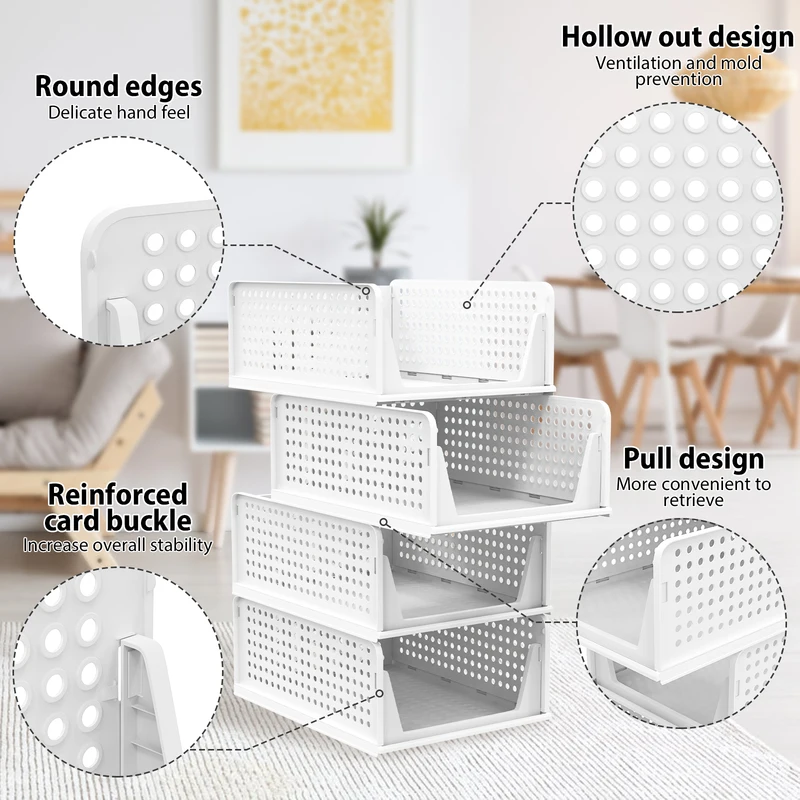
| Stackable Storage Drawers (4-Pack) | Real supplier stock — ships in 8–15 days | € 67.95 | 2 years |
| Foldable Storage Box with Handle | Real supplier stock — ships in 8–15 days | € 14.95 | 2 years |
Wash everything first, even the clean-looking
The cardinal rule of seasonal storage is that clothes go away clean. Worn-once jumpers carry skin oils and traces you cannot see, and months in a closed box give all of it time to set into stains and smells. Clothes moths are also drawn to worn fibres rather than freshly washed ones. So the wardrobe switch starts at the washing machine, not the closet. Wash or clean per the care label, dry everything completely, and only then fold. A damp cuff sealed in a box for a season is how musty smells are made.
Fold the off season, do not hang it
Hanging is for the clothes in play. Knitwear stretches out of shape on a hanger over months, and hanging storage eats the closet space your current season needs. The off season gets folded, stacked loosely, and boxed. Heavy items go at the bottom of each box, delicate ones on top, and nothing packed so tight it comes out permanently creased. If drawers suit your closet better, a dedicated off-season drawer in a stackable tower works the same way, and slides out of sight under the hanging clothes.
Map the dead zones
Small homes hide storage in the places daily life never reaches: the top of the closet, under the bed, the highest kitchen cupboard, the suitcase that would otherwise store air. Seasonal clothes are the perfect tenant for all of them, because you only visit twice a year. Closed boxes matter more here than anywhere: these zones collect dust, and an open basket up high is a dust tray with clothes in it. Fold-flat boxes with lids keep the contents clean and stack stable in shallow spaces, like the Foldable Storage Box with Handle.
Label like a mover
Six months from now you will not remember which box holds what, so write it down where you can read it: on the short side, the side that faces out of the shelf or peeks out from under the bed. Contents plus season is enough. 'Winter: jumpers and scarves' beats a mystery box every time. Keep one inventory rule too: one box per category, not per room. When boxes are single-subject, finding the ski socks in November takes one label read, not an afternoon of unpacking.
The twice-yearly swap, as a ritual
Tie the swap to the moment you switch duvets or feel the season turn. Empty the boxes, fill them with the outgoing season, and let the incoming clothes take the prime closet spots. The empty boxes fold flat and disappear until the next turn. The swap is also the year's best purge moment: anything that spent its whole season unworn goes to the donate bag before it earns another six months of storage. Seasonal storage should shrink a little every year, not grow.
FAQ
Should clothes be washed before seasonal storage?
Yes, everything, even pieces that look clean. Worn fibres carry oils that set into stains and attract clothes moths during months in a box. Wash or clean per the care label, dry completely, then pack.
Is it better to fold or hang clothes for long-term storage?
Fold almost everything. Knitwear stretches on hangers over months, and hanging storage claims closet space your current season needs. Reserve hanging for structured pieces like coats and suits, and box the rest.
Where should seasonal clothes go in a small flat?
In the zones daily life never touches: the top of the closet, under the bed, the highest cupboard, inside empty suitcases. Use closed, labelled fold-flat boxes so dust stays out and the label tells you what is inside at a glance.