Wall storage without drilling: what really holds
The most reliable no-drill wall storage does not touch the wall at all: leaning grid panels and freestanding racks carry real weight on their own feet. Adhesive hooks handle only light, dry loads, and tension rods work inside frames. Match the fix to the weight and the deposit stays safe.
At a glance
| Product | Best for | Price | Warranty |
|---|---|---|---|
| Grid Wall Panel Towers (2-Pack) | Real supplier stock — ships in 8–15 days | € 99.95 | 2 years |
| Double-Rod Closet Rack & Coat Hanger | Real supplier stock — ships in 8–15 days | € 45.95 | 2 years |
The no-drill hierarchy
Not all damage-free storage is equal, so rank it by what carries weight. At the top: freestanding pieces, which put every kilogram on the floor and merely lean on or stand near the wall. In the middle: tension-mounted rods and poles, which brace inside frames and alcoves. At the bottom: adhesive hooks and strips, which depend on glue, paint quality and humidity. The pattern to remember: the floor is the renter's friend. Anything that stands can hold serious weight for years; anything that sticks holds keys and tea towels.
Leaning grid panels, the closest thing to shelves
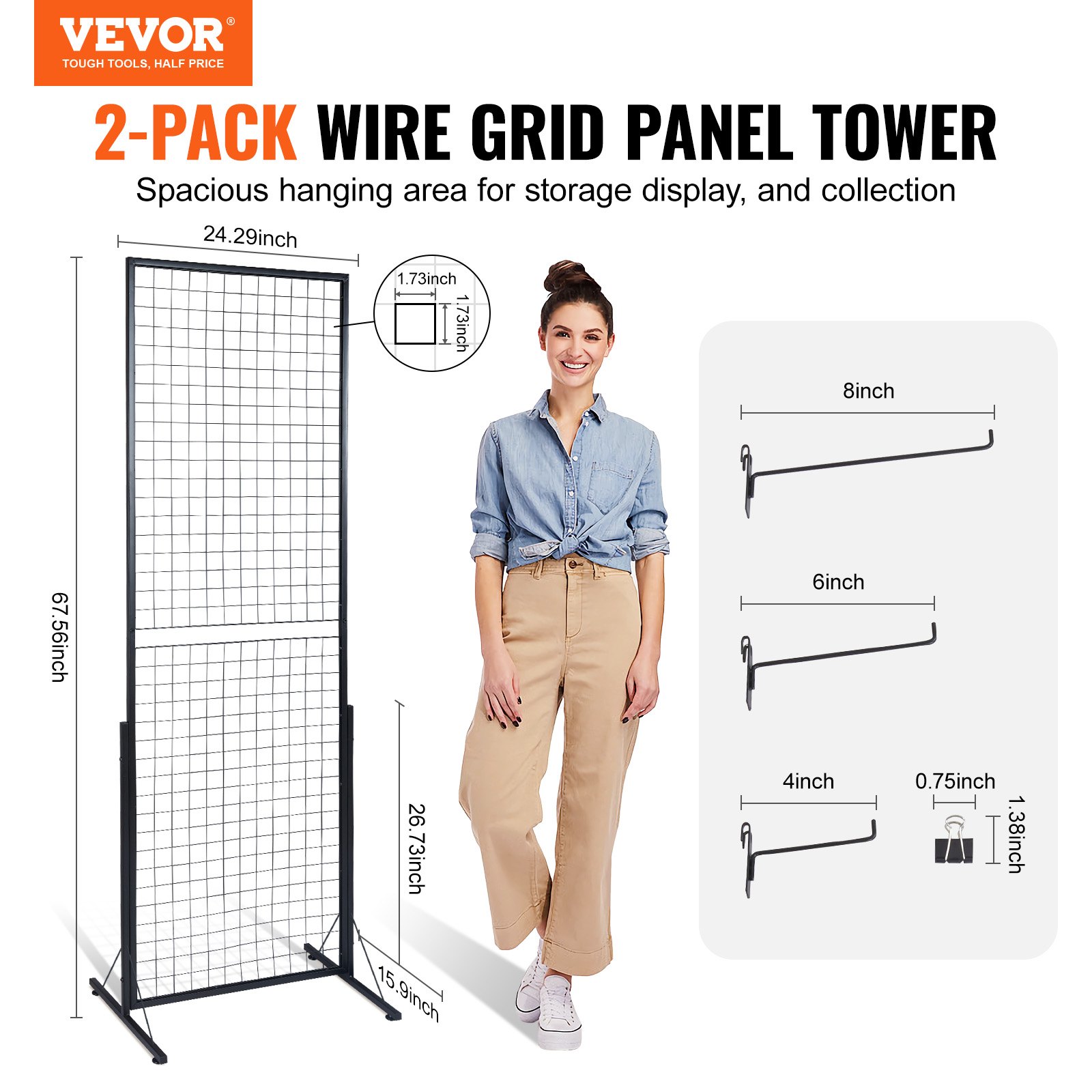
A grid panel tower stands on its own feet and leans where you need a storage wall: the hallway for keys and bags, the desk corner for supplies, the bedroom for accessories. Hooks, baskets and small shelves clip anywhere into the grid and move in seconds as needs change. The Grid Wall Panel Towers come as a pair, so one purchase can serve two rooms or build one wide wall. It is the closest a rental gets to custom shelving, and at move-out it walks to the van in one piece.
Freestanding racks for real weight
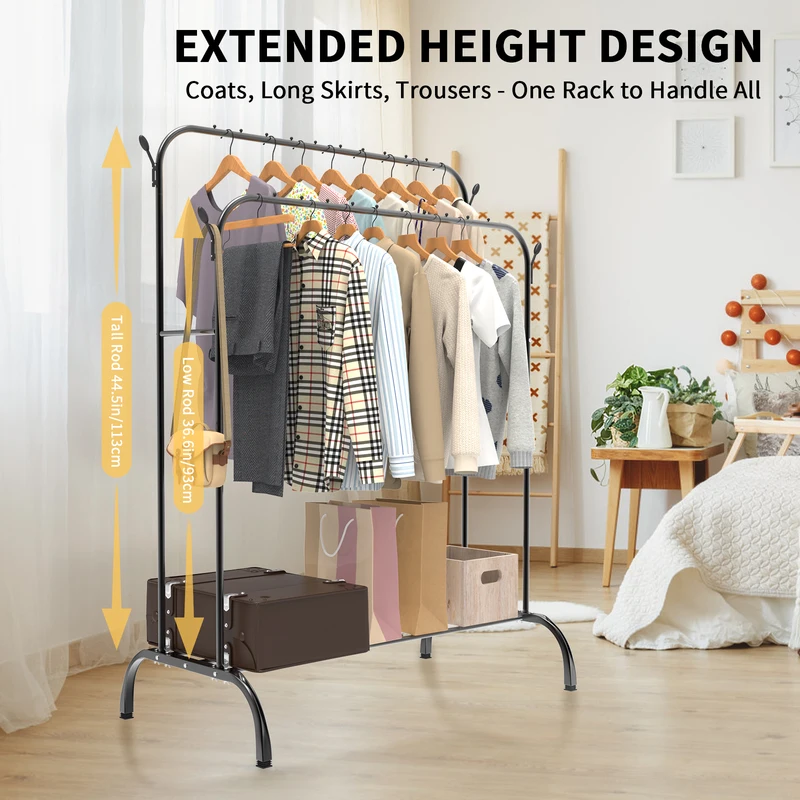
Coats, bags and a family's worth of hanging clothes are floor-standing territory. A double-rod rack takes a load that a row of adhesive hooks never could, and adds a second level of hanging that a wall hook row cannot match. The Double-Rod Closet Rack covers the hallway-coat problem and the overflow-wardrobe problem with the same piece. Put the daily coats at reachable height, the rarely used on the upper rod, and shoes or a fold-flat box on the base.
Where adhesive still earns a place
Adhesive hooks are genuinely useful at the light end: a dish towel, a calendar, a light bag inside a cupboard door. Stay within the weight printed on the packaging, press onto clean, smooth, dust-free paint, and expect less in steamy rooms, where moisture works on the glue. Removal deserves as much care as installation: pull the strip slowly along the wall as the instructions describe, not toward you. Treat every adhesive product as temporary and light-duty, and it will never cost you a patch of paint or a deposit discussion.
Match the fix to the load
The whole discipline in one line: weigh the thing, then choose the fix. Daily coats and bags go on freestanding racks. Rotating small items go on a leaning grid. Featherweight extras go on adhesive, inside cupboards where possible. Walk your home with that lens and most 'we need shelves' problems dissolve into 'we need one tower and one rack'. Nothing gets drilled, nothing gets stuck to the good paint, and the whole system moves out when you do.
FAQ
How much weight can adhesive hooks hold?
Only what the packaging states, and real-world conditions often deliver less: textured paint, dust and bathroom humidity all weaken the bond. Use adhesive for light items in dry rooms and put anything heavy on a freestanding rack instead.
Do grid wall panels need to be fixed to the wall?
Standing grid towers do not: they carry their load on their own feet and simply lean or stand where needed. Hooks, baskets and shelves clip into the grid, so the layout changes in minutes and the wall stays untouched.
What is the best renter-friendly alternative to shelves?
A leaning grid panel tower for small and medium items, plus a freestanding rack for hanging weight. Both stand on the floor, hold far more than adhesive solutions and leave zero trace at move-out.