EU Packaging Rules Apply From 12 August 2026: What Changes for Online Orders and the Boxes at Home
13 July 2026 · Sustainability
The Packaging and Packaging Waste Regulation starts applying in every EU country on 12 August 2026. Right-sized parcels, recyclable-by-2030 packaging and less void fill: what the rules say and what they change at home.
The date that matters: 12 August 2026
The EU's Packaging and Packaging Waste Regulation, Regulation (EU) 2025/40, entered into force on 11 February 2025 and generally applies from 12 August 2026, according to the European Commission. It replaces the old packaging directive with rules that bind directly in every member state, covering all packaging placed on the EU market, from supermarket wrap to the parcel on your doormat. Individual obligations phase in over several years, but this summer is the moment the framework becomes live law for producers and retailers.
Why the EU acted: packaging waste keeps growing
The Commission cites 186.5 kg of packaging waste generated per person in the EU in 2022. The European Parliament, in its release on the rules, noted that each European generated 188.7 kg in 2021 and that the figure was projected to reach 209 kg by 2030 without additional measures. The regulation's answer is binding reduction targets: 5% less packaging waste by 2030, 10% by 2035 and 15% by 2040. It is a rare case where the policy goal lines up neatly with a household one, since less packaging in the shop means less cardboard in your hallway.
Parcels get right-sized
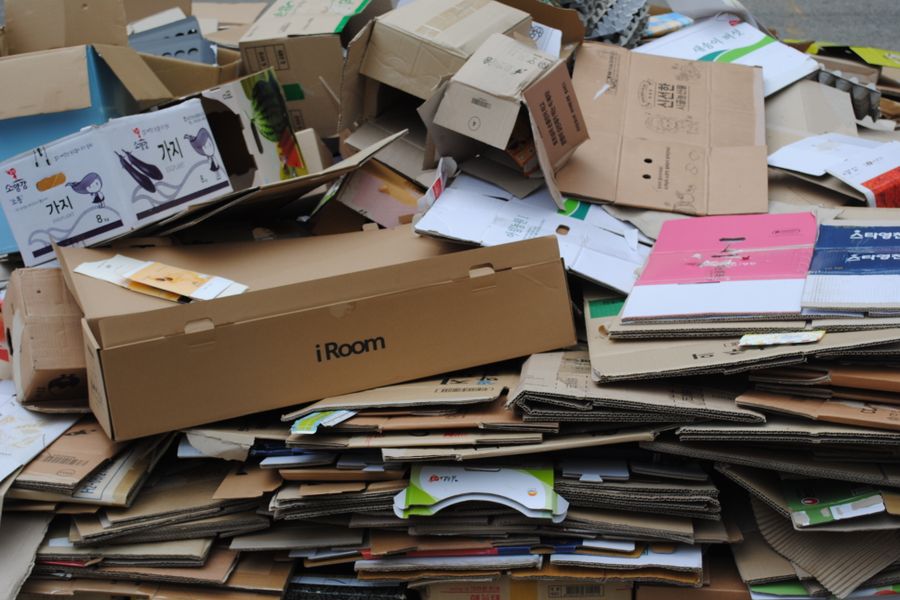
For online shoppers the most tangible change is the attack on shipping air. The regulation sets a maximum empty space ratio of 50% for grouped, transport and e-commerce packaging, per the European Parliament, and fillers such as air cushions and paper stuffing count toward that empty space. Oversized boxes around small products become a compliance problem rather than a shrug. Expect parcels that match their contents more closely in the coming years, and with them fewer of the half-empty boxes that pile up after every order.
What disappears, what becomes standard
By 2030 the regulation requires all packaging on the EU market to be recyclable in an economically viable way, per the Commission. From 1 January 2030 certain single-use plastic formats are banned outright, including packaging for unprocessed fresh fruit and vegetables, individual condiment portions in hospitality, hotel miniature toiletries and very lightweight plastic carrier bags. Takeaway businesses must also offer customers the option to bring their own container at no extra cost. The direction is consistent: less single-use, more reuse, and packaging designed to go around again.
The home angle: a working cardboard corner
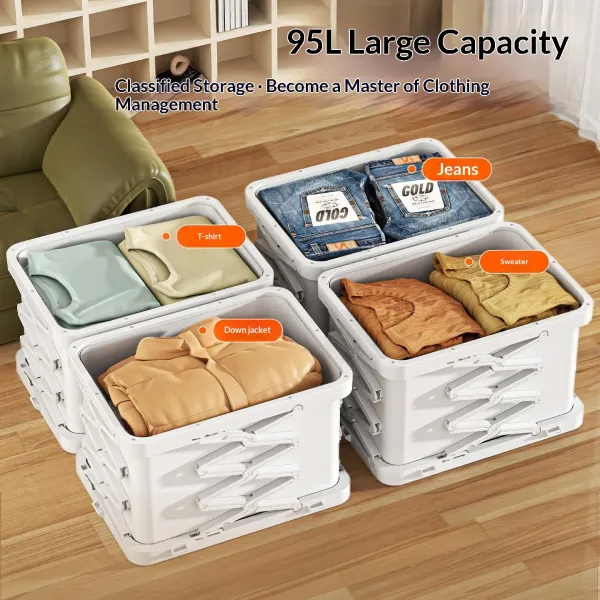
None of this obliges households to do anything, but homes feel the effects at the recycling bin. A practical response is to treat packaging as a flow with one fixed station: a spot where boxes get broken down flat the day they arrive, and a small reserve of genuinely useful boxes kept for storage, returns and the next move. Fold-flat storage fits that logic well, since it applies the regulation's own principle, no bulk when empty, to your own hallway. One cabinet or corner that processes cardboard beats a slow drift of boxes through every room.
Foldable Storage Box with Handle
Grab-handle box, folds flat after
Foldable Storage Cabinet (No Tools)
A cabinet that assembles in minutes
FAQ
When does the new EU packaging regulation start to apply?
Regulation (EU) 2025/40 entered into force on 11 February 2025 and generally applies from 12 August 2026, with individual obligations phasing in over the following years, according to the European Commission.
Will online orders come in smaller parcels?
That is the intent. The regulation caps the empty space ratio of grouped, transport and e-commerce packaging at 50%, and void fillers count as empty space, so oversized boxes around small items are set to disappear.
Which packaging will be banned from 2030?
From 1 January 2030 the EU bans certain single-use plastic formats, including packaging for unprocessed fresh produce, individual condiment portions, hotel miniature toiletries and very lightweight plastic carrier bags, per the European Parliament. All packaging must also be recyclable by 2030.
Sources
- European Commission — Packaging waste (Environment)
- European Parliament — New EU rules to reduce, reuse and recycle packaging (press release)
- EUR-Lex — Regulation (EU) 2025/40 on packaging and packaging waste