Under-sink organizer for a small kitchen
The best under-sink organizer for a small kitchen is a two-tier shelf that fits around the plumbing, paired with a bin or two for refills. Measure the cupboard depth, the height under the trap and the door opening first, then build in layers so nothing hides behind row one.
At a glance
| Product | Best for | Price | Warranty |
|---|---|---|---|
| 2-Tier Under-Sink Shelf with Hooks | Real supplier stock — ships in 8–15 days | € 35.95 | 2 years |
| Foldable Storage Box with Handle | Real supplier stock — ships in 8–15 days | € 14.95 | 2 years |
Measure the cupboard before you buy anything
Under-sink cupboards are the least standard space in the kitchen: a drain pipe on the left or right, a trap hanging in the middle, sometimes a bin mounted on the door. Before buying any organizer, note three numbers: the depth from door to back wall, the free height under the trap, and the width between the pipe and the side panel. Write them on your phone and take them shopping. Most under-sink frustrations are bought, not built: a rigid unit that ignores the trap will sit half-installed forever. Anything you put in this cupboard must either fit under the pipes or fit around them.
A two-tier shelf turns one floor into two
The single biggest upgrade is vertical: an adjustable two-tier shelf that straddles the plumbing turns a dark pile into two shallow, visible layers. Tall sprays stand on top where the trap does not reach; low bottles, cloths and brushes live below. Choose a shelf with adjustable feet and movable panels, like the 2-Tier Under-Sink Shelf, so the shelf adapts to the pipe instead of fighting it. Once it is in, apply one rule: everything stands upright, nothing lies flat. A bottle on its side is invisible; a bottle standing up announces itself.
Refills go in one carry box
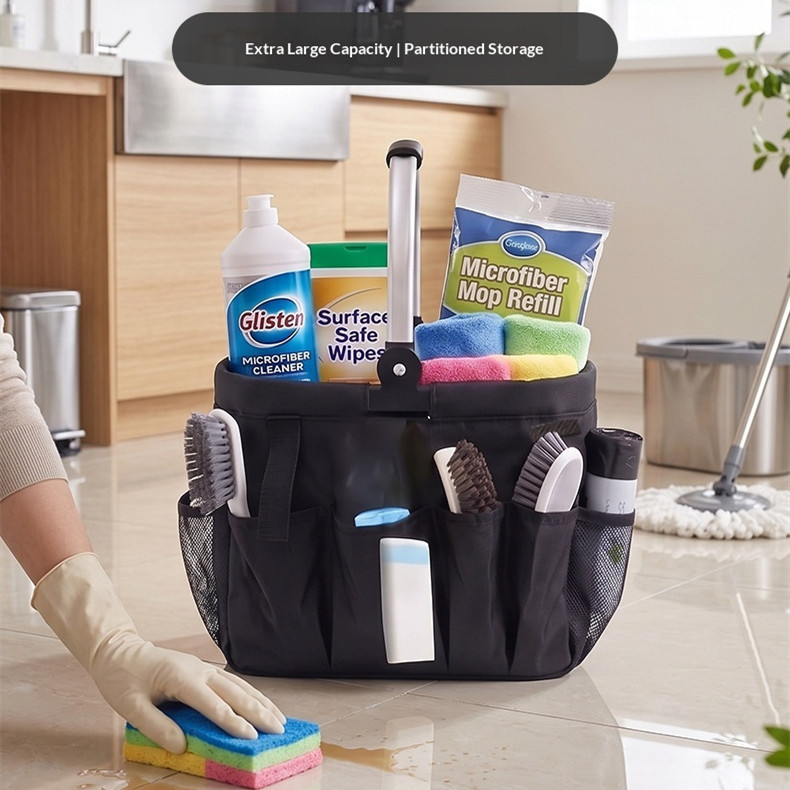
Backup stock is what makes under-sink cupboards overflow: three spare sponges here, two refill bottles there. Collect every refill into a single box with a handle, so the whole reserve lifts out in one movement when you restock. A fold-flat box like the Foldable Storage Box with Handle earns its place because the reserve shrinks and grows through the year: full after a supermarket run, folded flat a few weeks later. Label it, keep it on the lower level, and the rule becomes simple: the front row is for daily bottles, the box is for everything waiting.
What should not live under the sink
Some things do not belong near a drain, however convenient the cupboard is. Paper goods and anything absorbent sit badly next to plumbing, because even a well-behaved trap sees the occasional drip. Food and small appliance parts belong elsewhere for the same reason. If small children live in the home, move anything hazardous up and away or fit a simple child lock. That trimming is not lost space: fewer categories under the sink means the categories that remain get room to stand, and the cupboard stops being the place where cleaning products go to disappear.
The renter's bonus
Everything above works in a rental: the shelf stands on its own feet, the box carries itself, and nothing is screwed to the cabinet. When you move, the whole system comes along and adapts to the next sink in an afternoon. That matters because the under-sink cupboard is often the first place a small kitchen wins real space. Start there, apply the same layering logic to the next cupboard, and the kitchen grows without a single new cabinet.
FAQ
What size under-sink organizer do I need?
Measure three things first: the depth of the cupboard, the free height under the trap and the width beside the pipes. Choose an adjustable two-tier shelf that can straddle the plumbing, and check the door still closes if a bin hangs on it.
How do I organize under a kitchen sink with pipes in the way?
Work around the pipes instead of against them: an adjustable shelf with movable panels straddles the trap, tall bottles stand where the pipe is not, and refills sit in a single carry box on the lower level. Everything upright, nothing stacked loose.
What should you not store under the kitchen sink?
Keep paper goods, food and anything absorbent away from the plumbing, since drips happen even in tidy cupboards. If small children live in the home, move hazardous products higher up or add a child lock.