Clutter and Wellbeing: New Study Finds the Link Runs Through How Beautiful Your Home Feels

30 July 2026 · Research
A 2025 study in the Journal of Environmental Psychology surveyed 501 adults and found that people in more cluttered homes report lower wellbeing, with the link partly explained by how beautiful the home feels. What the research shows, and where its limits are.
The study: 501 adults, one moderate but consistent pattern
Psychologist Francis Quinn of Robert Gordon University in Aberdeen surveyed 501 adults about their homes and their state of mind, and published the results in the Journal of Environmental Psychology in 2025. Participants rated how cluttered their home is and how beautiful it feels, and completed standard measures of mental wellbeing, positive and negative emotion and life satisfaction. The pattern was consistent: the more cluttered people judged their home, the lower the wellbeing and life satisfaction they reported, and the more negative emotion. The association was moderate rather than dramatic, which fits how a home should matter: as one steady influence among many, not as destiny.
The interesting part: beauty carries the effect
The study's contribution is not the headline correlation, which earlier work had already established, but the mechanism. Using partial least-squares structural equation modelling, Quinn found that the relationship between clutter and wellbeing was partly explained by perceived home beauty: cluttered homes were experienced as less beautiful, and homes experienced as less beautiful went together with lower wellbeing. Greater home beauty was itself associated with better wellbeing. That reframes what decluttering is for. The costly thing about a messy room may not be the objects themselves but what they do to the look of the place you sit in every evening: clutter as an aesthetic problem with psychological consequences.
What the study does not say
The honest caveats, which the paper itself makes. This is a cross-sectional survey, a snapshot of 501 people at one moment, so it demonstrates association rather than cause, and it cannot rule out the arrow pointing the other way, with low moods making it harder to keep a home in order. Quinn also tested whether the link was stronger for particular groups, such as people who spend more time at home or people intending to declutter, and found that none of the tested moderators was significant: the association appeared broadly across the sample. The data were collected during the COVID pandemic, a detail worth remembering when generalising to 2026 living patterns. And clutter is not a diagnosis; none of this is medical advice.
It lands on a decade of similar findings
The result fits a small but consistent research line. In 2016, Catherine Roster, Joseph Ferrari and M. Peter Jurkat surveyed close to 1,400 adults in the United States and Canada for the Journal of Environmental Psychology, defining clutter as an overabundance of possessions that collectively create chaotic and disorderly living spaces. Their finding: more clutter meant a weaker sense of being at home in one's home and lower subjective wellbeing. Earlier still, a 2010 study by Darby Saxbe and Rena Repetti analysed how 60 dual-income spouses described their own homes. Wives whose home tours dwelt on clutter and unfinished projects showed flatter daily cortisol slopes, a stress-hormone profile the literature links to adverse health outcomes, and more depressed mood over the course of the day.
The practical reading: start with what you can see from the sofa
If the clutter effect travels through beauty, the priority list writes itself: sightlines first. The clutter that plausibly costs the most is the kind in view all evening, the pile beside the sofa, the drift on the kitchen counter, the chair wearing three days of clothes. Closed storage that looks good in the room moves those categories out of sight without banishing them: a tray gives the daily pocket-drop one address, a lidded fold-flat box swallows a visible pile in minutes, and a hamper presentable enough for the bedroom retires the clothes chair. None of it is a mental-health intervention. It is ordinary interior maintenance, now with a plausible mood dividend attached.
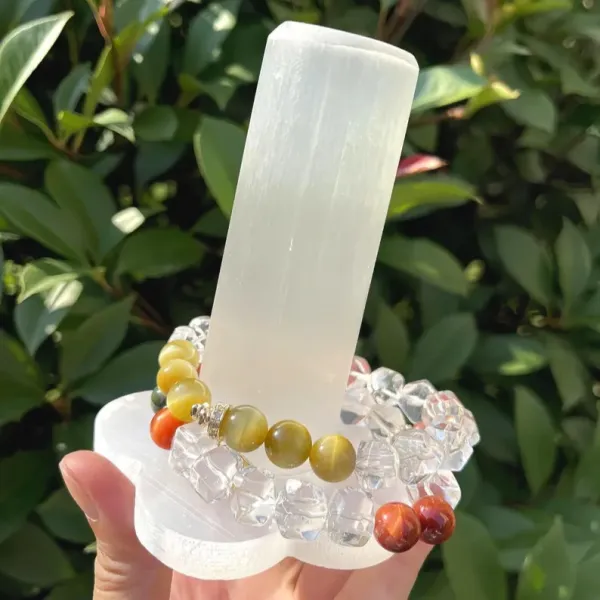
Decorative Storage Tray
A landing spot for daily carry
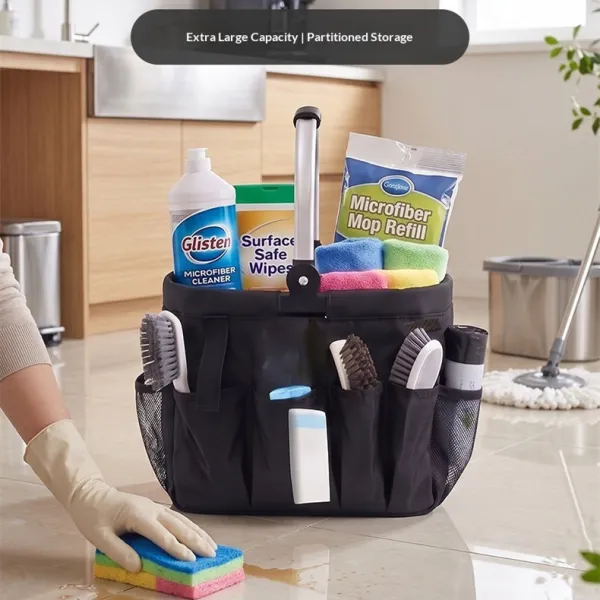
Foldable Storage Box with Handle
Grab-handle box, folds flat after
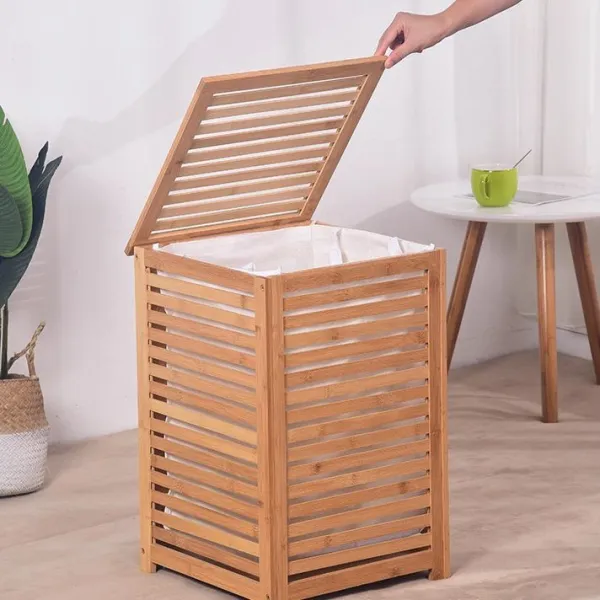
Bamboo Laundry Hamper with Lid & Liner
Laundry hidden under a bamboo lid
FAQ
Does clutter cause poor mental health?
The research shows an association, not proven causation. The 2025 study was cross-sectional, so it cannot rule out the reverse direction, where feeling low makes tidying harder. What can be said is that across several peer-reviewed studies, people who judge their homes cluttered consistently report lower wellbeing.
What is home beauty in the 2025 clutter study?
Participants' own rating of how beautiful their home feels. The study found that clutter went with lower rated beauty and lower rated beauty with lower wellbeing, and that this partly explained the clutter-wellbeing link. Home beauty on its own was associated with better wellbeing.
Is decluttering worth trying for my mood?
It is a cheap experiment with reasonable odds: several peer-reviewed studies associate visible order at home with better wellbeing, and the 2025 finding suggests the visible part matters most. It is not a treatment for anything, and persistent low mood is a conversation for a professional, not a storage box.
Sources
- Journal of Environmental Psychology — Home clutter and mental well-being: Exploring moderators and the mediating role of home beauty (Quinn, 2025)
- Journal of Environmental Psychology — The dark side of home: Assessing possession clutter on subjective well-being (Roster, Ferrari & Jurkat, 2016)
- Personality and Social Psychology Bulletin — No Place Like Home: Home Tours Correlate With Daily Patterns of Mood and Cortisol (Saxbe & Repetti, 2010)
- ScienceDaily — Cutting through the clutter: Study examines dark side of home (July 2016)