Safety Gate Logged 4,671 Dangerous-Product Alerts in 2025: How EU Recalls Work Now, and What You Can Claim

4 August 2026 · Product safety
The EU's rapid alert system validated 4,671 alerts on dangerous products in 2025, and the General Product Safety Regulation has rewritten what a recall must offer you: plain-language notices and a choice of repair, replacement or refund. A practical guide to the system and your rights.
One year, 4,671 alerts: the warning system most shoppers have never opened
Safety Gate is the EU's rapid alert system for dangerous non-food products. When a national market-surveillance authority finds a product that poses a risk, it files an alert; the European Commission validates it and circulates it to the authorities of all EU and EEA member states, which then check their own markets. The latest annual results, covering 2025, count 4,671 validated alerts plus 5,794 follow-up actions, in which other countries reported finding the same product and taking measures of their own, more than 4,500 additional measures in total. The part shoppers tend to miss: a summary of every alert is public. The Safety Gate Portal publishes them with the information automatically available in 28 languages, and anyone can search it. The system covers consumer products from toys to furniture; food, pharmaceuticals and medical devices have separate alert systems of their own.
What got flagged in 2025: cosmetics first, toys second
The 2025 breakdown is dominated by three categories. Cosmetics were the most frequently notified products for the third year running at 36% of alerts, followed by toys at 16% and electrical appliances and equipment at 11%. Sorted by type of risk, chemical hazards led at 53% of alerts, ahead of injury risks at 14% and choking at 9%. For household-goods shoppers the injury and choking columns are the relevant ones: the report cites childcare articles and toys that fail to protect children from falls, and small parts that come loose. None of this says most products are dangerous; the overwhelming majority on the market are fine. What it says is that the enforcement machine that removes the exceptions is busy, publicly documented, and worth knowing how to read.
The law behind the numbers: the GPSR, in force since December 2024
The rules powering this system changed recently. Regulation (EU) 2023/988, the General Product Safety Regulation, applies since 13 December 2024 and replaced the general product safety directive that had governed since 2001. Its baseline is unchanged, only safe products may be placed on the EU market, but the machinery around it tightened. Products now generally have to carry the name and contact details of a responsible person established in the EU, so there is always someone within reach of European authorities, even for goods made elsewhere. Online marketplaces must register their contact details with the Commission so that dangerous listings can be taken down quickly, and an eSurveillance web crawler checks automatically whether products already flagged on Safety Gate are still, or again, offered for sale online.
A recall notice is no longer allowed to whisper
The most consumer-visible change is what a recall must look like. Under Article 36 of the GPSR, a written recall notice must be headlined with the words 'Product safety recall', identify the product clearly with a picture and identifiers such as batch or serial numbers, and describe the hazard plainly. The regulation explicitly bans language that plays the risk down: terms such as 'voluntary', 'precautionary', 'discretionary' or 'in rare situations' may not be used, and neither may the classic reassurance that no accidents have been reported. The notice must tell you to stop using the product immediately, spell out the remedies you are owed, and provide a free phone number or an online service for questions. In short: if a company recalls something you own, the letter or web page is legally required to make that unmistakable.
Repair, replacement or refund: what you can claim
Article 37 of the GPSR sets out the remedies. The company responsible for a recall must offer you an effective, cost-free and timely remedy, and as a rule a choice between at least two of the following: repair of the product, replacement with a safe one of the same type and at least the same value and quality, or an adequate refund of at least the price you paid. The costs may not land on you: return shipping is not yours to pay, and for products that are not portable, the company must arrange collection. If a promised repair or replacement is not completed within a reasonable time and without significant inconvenience, you are entitled to a refund after all. These are minimum rights in every EU country, and they sit alongside, not instead of, your ordinary warranty rights.
The recall-ready cupboard: a five-minute habit
Recalls reach the people who can identify what they own. Two small habits cover that. First, give proof-of-purchase a fixed home: receipts, warranty cards and manuals in one place beats a search through three drawers when a recall notice asks for a model or batch number, and a refund claim is simpler with the price paid on paper. A document bag, ideally the same fire-resistant pouch that already holds passports and insurance papers, or one labelled fold-flat box on a high shelf does the job. Second, know the two public counters: the Safety Gate Portal to check whether a product, including a second-hand cot or chest of drawers, has ever been flagged, and the Consumer Safety Gateway, where you can report an unsafe product or accident in your own language and have it forwarded to the responsible national authority. Not medical or legal advice, just the boring infrastructure that makes your rights usable.
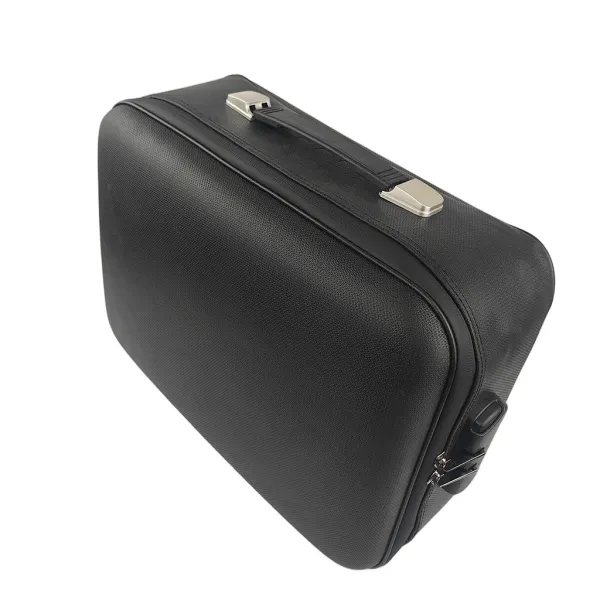
Fire-Resistant Document Organizer Case
Passports and papers, fire-resistant
Foldable Storage Box with Handle
Grab-handle box, folds flat after
FAQ
Can I search EU product recalls myself?
Yes. The Safety Gate Portal publishes a summary of every validated alert, with the information automatically available in 28 languages. In 2025 the system validated 4,671 alerts on dangerous non-food products, so it is worth a quick search before buying second-hand furniture or childcare items.
What must an EU recall notice look like since the GPSR?
A written recall notice must be headlined 'Product safety recall', identify the product with a picture and batch or serial numbers, describe the hazard without minimising terms such as 'voluntary' or 'in rare situations', instruct you to stop using the product immediately, list your remedies and give a free phone number or online service.
What am I entitled to when a product I bought is recalled?
Under Article 37 of the GPSR, the responsible company must offer a cost-free, timely remedy and generally a choice between at least two of: repair, replacement of equal type and value, or a refund of at least the price you paid. Return shipping may not be charged to you, and non-portable products must be collected.
Sources
- European Commission — Safety Gate 2025 results (annual report of the Rapid Alert System)
- EUR-Lex — Regulation (EU) 2023/988 on general product safety (GPSR)
- European Commission — Safety Gate: the EU rapid alert system for dangerous non-food products